
Parked Car Plate Privacy: Shows, Shoots and Meets
If you want your plate out of sight while the car sits at a show, a photoshoot or a meet, the cleanest answer is a cover you can switch on when the car is parked on private or off-road ground and take off the moment it rolls onto a public street. Our Ghost Curtain Cover is built for that job: it fits standard US and Canadian plates, installs without tools and is weather-sealed, so it stays on the car through a full event weekend.
That last part matters. In the US, privacy for a plate is a different question when the car is parked at a venue than when it is parked at a curb or driven. This guide separates the two, so you can enjoy the clean shots and the anonymity without a ticket.
TL;DR
- Anyone can photograph your parked car and plate in public, and a plate on its own does not hand a stranger your name or address.
- Covering a plate is a controlled-environment tool: car shows, photo and video work, track days and off-road events, on private or closed ground.
- On public roads and public curbs, covering a plate is illegal or heavily restricted in many states, and several have tightened their laws since 2024.
- Look for universal fit, quick tool-free installation, weather sealing and a design you can fully remove before you drive.
- Cover the plate at the venue, uncover it before you leave. That one habit keeps the whole setup on the right side of the rules.
Table of Contents
- Who can see your plate when the car is parked
- Where the law draws the line
- Where a plate cover belongs: shows, shoots, tracks and trails
- What to check before you buy a quick-install cover
- Plates in photos and video: a simple routine
- Cover the plate on the car, not on the road
- Our pick for parked-car plate privacy
- Our point of view
- FAQ
- Sources
Who can see your plate when the car is parked
Most people who search for parked car plate privacy are worried about one of three things: a stranger posting their car online, someone tracing the plate back to them, or a camera logging where the car sits.
On the first, the answer is that there is little privacy to claim. An attorney answering on Avvo explains that anyone in a public place, including a parking lot, can photograph your car and write down the plate number. The First Amendment Coalition’s counsel adds that no law stops someone from publishing a plate in a photo, since plates are displayed openly on every car.
On the second, the news is better. Under the federal Driver’s Privacy Protection Act, state DMVs may only release the owner’s name, address and similar details to authorized requesters such as law enforcement, courts and insurers, as LegalClarity explains. A random person cannot look up who you are from a plate number. Commercial lookup services generally return vehicle-level data such as make, model and year.
So the realistic worry is not a stranger pulling your home address from a photo. It is the plate becoming a permanent, searchable tag on your build, your event photos and your social feed. That is exactly the problem a removable cover solves at a show or shoot.
Where the law draws the line
Here is the part to read twice. Hiding a plate is a venue tool, not a street tool. The American Association of Motor Vehicle Administrators (AAMVA), the body that represents state motor vehicle agencies, states in its policy position that plates must stay unobstructed and readable by people and by automated cameras from at least 75 feet away, with no covers, coatings or frames that hinder recognition.
The National Motorists Association notes that simply owning a plate-obscuring product is typically not illegal, but using one on public roads can bring a citation, points, confiscation and, in serious cases, obstruction or fraud charges. A “for off-road use only” label does not change that once the car is on a public road.
State and city rules have moved quickly. A snapshot of recent changes:
| Place | What the rule says | Source |
|---|---|---|
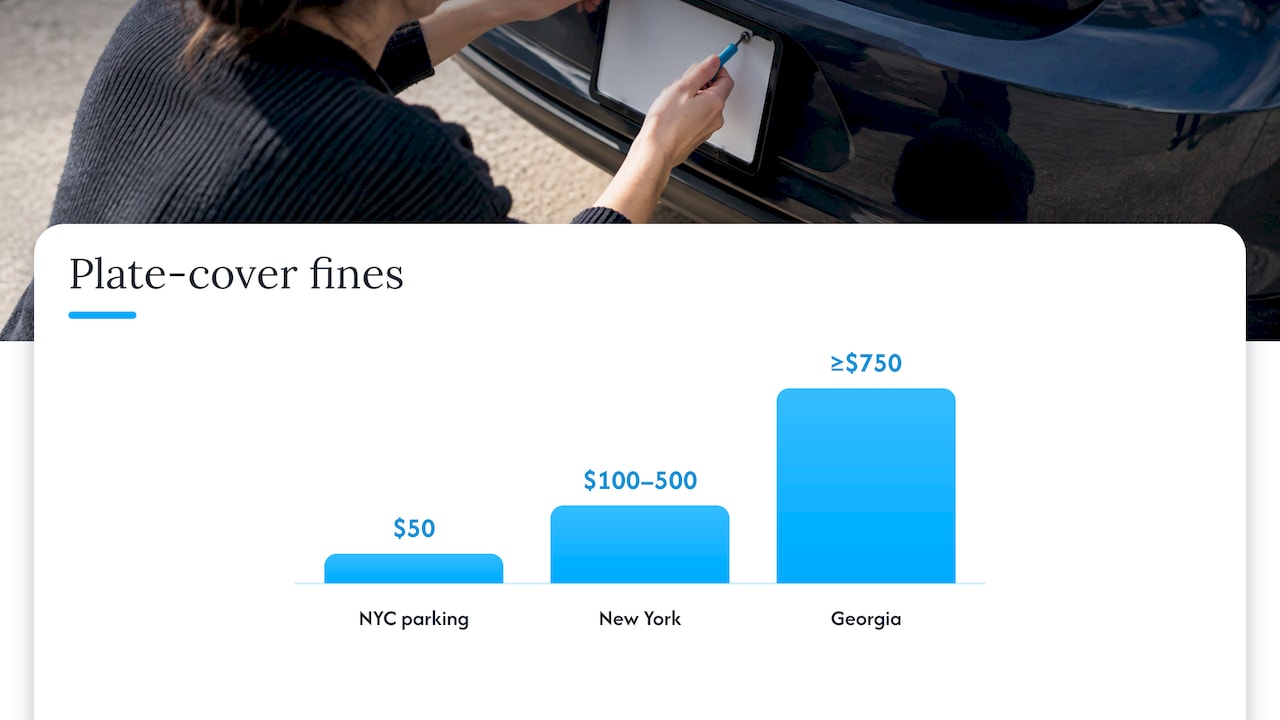
| New York City | Rules effective April 16, 2025 bar any obstruction of a plate, including glass or plastic covers, with a $50 fine for parking with an obscured plate | NYC DOT |
| New York State | Since September 1, 2024, fines of $100 to $500 for covering a plate with glass, plastic or material that could distort a camera image, and a ban on selling covers | NY DMV |
| California | Section 5201.1, as amended effective January 1, 2026, covers devices that obscure reading of a plate by visual or electronic means | California Vehicle Code |
| Georgia | Under the version effective July 1, 2026, willfully covering a plate to impede surveillance equipment is a misdemeanor with a fine of at least $750 | Georgia Code 40-2-6.1 |
| Kansas | Senate Bill 403, effective July 1, 2026, protects the plate number, state, and decal from frames or objects that affect legibility | Kansas City Star |
Two takeaways. First, NYC’s rule covers parking too: a cover on a parked car on a city street can be ticketed, so a street curb is not a safe place for a cover in a city like that. Second, this is a moving target. Check your own state’s motor vehicle agency before you travel to an event, and for a plain-language rundown see our guide to U.S. license plate cover laws.
AAA Northeast also points out that blocking a plate is illegal in almost every state and that “ghost plates” are linked to toll, red-light and speed-camera evasion. That is why the rest of this guide stays on parked, off-road and event use only.
Where a plate cover belongs: shows, shoots, tracks and trails
The legitimate uses all share one trait: the car is not on a public road while the plate is covered.
- Car shows and meets on private lots. You want your build photographed, not your plate indexed next to it. A cover goes on when you park and comes off when you leave.
- Photo and video shoots. Clean frames, no plate to blur out later, no chance of a missed frame in a long video.
- Track days and off-road events. Closed courses and trails where the car is never driven on a public street with the cover in place.
- Display and storage on private property. A garage, a showroom floor, a private event space.
The moment the car moves onto a public road, the plate has to be fully visible. Plan the day around that: arrive with the plate clear, cover it once you are parked on the venue, uncover it before you drive out. If your event requires a road transfer, build the uncovering into your load-out routine, the same way you would take off a track-day tow strap.
If you ride, the same logic applies, and our motorcycle plate privacy guide covers fit for smaller plates. SUV owners with recessed or angled rear plates can look at rear plate fit on SUVs.
What to check before you buy a quick-install cover
For event use you want something fast, universal and tough. These are the checks that matter.
- Universal fit. Standard US and Canadian plates are all the same size, so the cover should fit any of them without drilling or adapters. Our covers are designed to fit all standard US and CA plates, so one cover can move between cars.
- Tool-free installation. If you are moving the cover between a show car and a daily, you do not want a toolbox. Quick mounting means you can set up in the parking lot in minutes.
- Weather sealing. Events run in rain, dust and heat. A sealed unit keeps the plate clean and the mechanism working.
- Operation that suits the setting. Manual designs, like a sliding curtain, are simple and reliable: you open and close it by hand when you park and leave. Electric designs switch with a wireless remote, which suits a moment when you want the plate to go dark or clear without walking around the car.
- Full removability. Because the cover has to come off before driving, choose one you can take off quickly and store in the trunk.
- Right-sized for the car. Cars and motorcycles use different plate sizes and mounting points, so confirm the product is made for your vehicle type.
GoGhost offers both electric and mechanical options, so the same brand covers both preferences. More than 10,000 drivers use our covers, and our storefront carries a 4.9-star rating from nearly 3,000 reviews, with installation ease among the things customers mention most.
For a deeper look at the categories, our license plate privacy options guide walks through five types and how each behaves.
Plates in photos and video: a simple routine
Here is how to get a plate-free shot every time.
Before the shoot
- Park on private property, a closed lot or the event grounds.
- Fit the cover and confirm it sits flat and shows no plate edge, stickers or frame lines in your angles.
- Shoot your stills and video clips from every angle you want, including rolling shots on closed ground.
After the shoot
- Remove or open the cover before the car goes onto a public road.
- Check the plate is fully clear, including the registration sticker and state name, which every state requires to stay visible.
- Keep the cover in the trunk until the next stop.
If you also publish photos taken by others, a quick edit can hide the plate in copies. That is a separate step from what happens on the car, and covering at the venue means you have less to fix after the fact.
Cover the plate on the car, not on the road
People often mix up two ideas. A plate cover for a parked display and a plate-obscuring device used while driving are legally very different things, even if they look alike. New York City’s Council described “ghost” plates in a 2025 oversight report as plates displayed to obscure true ownership or avoid fines, fees and tolls. That is the opposite of a show cover that comes off before you leave.
If you want to understand how enforcement cameras read plates and why road use is a bad idea, our overview of traffic camera types explains it, and our guide to toll tags and plate covers covers a common mix-up. If a ticket has already landed, see the five steps for a plate cover ticket.
Our pick for parked-car plate privacy
For drivers who want a fast, universal way to take the plate out of the picture at events and shoots, the Ghost Curtain Cover is $129.99, a one-time price. It mounts without tools, fits standard US and CA plates, and is weather-sealed. We ship the same day, so an order placed ahead of a weekend show has a real chance of arriving in time.

If you prefer the electric version with wireless remote activation, you will find both technologies on GoGhost.
Our point of view
We built GoGhost around a simple idea: enthusiasts should be able to enjoy their cars at shows, on tracks and in front of cameras without handing their plate to the whole internet.
That is why we make both electric and mechanical covers. A sliding curtain is simple and dependable for someone who wants to set it and forget it. An electric glass cover with a wireless remote suits the driver who wants the plate to go dark with a flip of a switch. Both fit all standard US and CA plates, install without tools and are weather-sealed, so a cover belongs in the car’s kit the way a cover for the paint does.
We also think the rule of thumb is simple: private ground or closed course, cover on; public road, cover off and plate fully readable. Laws are tightening state by state, and the drivers who follow that routine are the ones who get all the benefit and none of the headaches.
GoGhost
FAQ
Can someone take a photo of my parked car and plate?
Yes. Anyone standing in a public place, including a parking lot, can photograph your car and plate, and publishing such a photo is generally not prohibited. A plate alone does not give them your name or address, because the federal Driver’s Privacy Protection Act limits who can get owner details from a DMV.
Is it legal to cover my plate at a car show?
Covering a plate on private or event grounds, with the car not on a public road, is the use these products are meant for. The restrictions apply once the car is on a public road or street, and cities like New York can ticket a covered plate on a parked car at the curb. Check your state’s rules and the event’s own policy.
What is a ghost plate?
New York City’s Council defines it as a plate displayed to hide the true ownership of a vehicle or avoid fines, fees and tolls. A show cover that you remove before driving is a different matter: it is used at the venue, and the plate is fully visible on the road.
How do I pick a universal-fit cover?
Look for fit with standard US and Canadian plates, tool-free installation, weather sealing and quick removal. Then choose manual or electric operation based on how you use it. We offer both, so you can pick the one that matches your routine.
Sources
- Avvo: Can a person take pictures of me and my license plate
- First Amendment Coalition: Publishing a photo showing license plate numbers
- LegalClarity: Should You Cover Your License Plate in Pictures?
- AAMVA: License plates should not be obscured
- National Motorists Association: Are anti-speed camera covers and sprays legal
- NYC DOT: New rules to crack down on obscured license plates
- New York DMV: Consumer alert on plate covers
- California Vehicle Code 5201.1
- Georgia Code 40-2-6.1
- Kansas City Star: Kansas license plate rules
- AAA Northeast: Are license plate covers illegal?
- NYC Council: Plate and Switch report